

New Class Action Targets Motorola as Legal Challenges to License Plate Recognition Technology Continue to Expand
Motorola Lawsuit Escalates California’s Growing War on LPR Data
Chicago, IL – June 22, 2026 – One of the nation’s largest technology companies is facing a proposed class action lawsuit that could have implications far beyond law enforcement and privacy advocates.
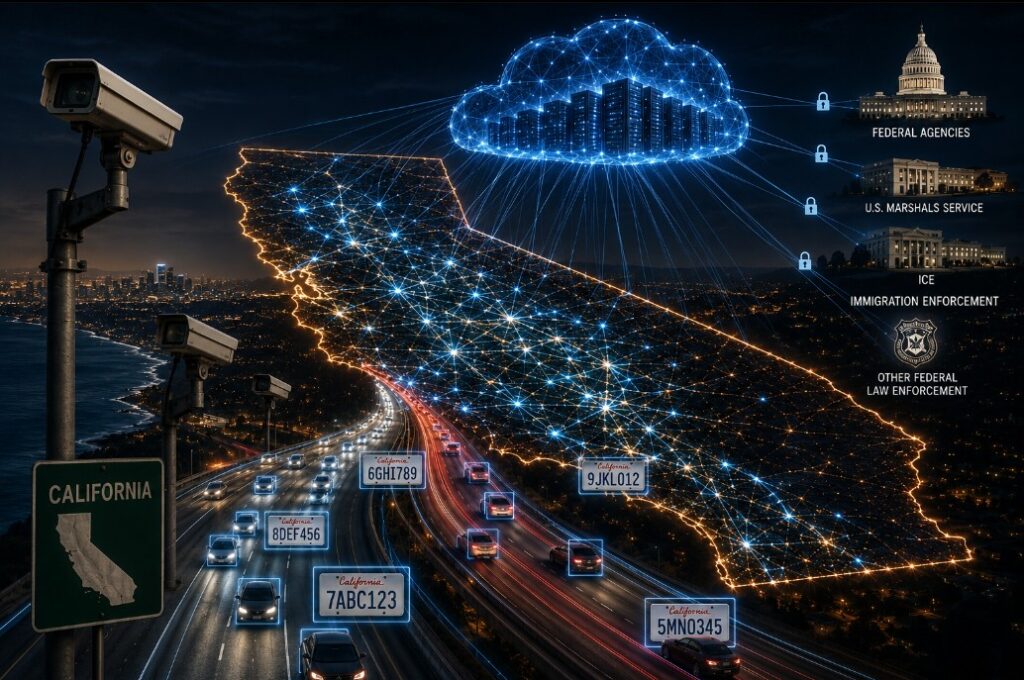
Motorola Solutions has been accused of improperly collecting, storing, and sharing vehicle location data generated through its license plate recognition (LPR) systems, including alleged access by federal agencies and organizations outside California.
The lawsuit, filed May 27th in Illinois, seeks to represent potentially thousands of California motorists whose vehicle movements were allegedly recorded through Motorola-operated LPR networks.
While the case is currently focused on California privacy law, it represents the latest chapter in a rapidly expanding legal battle over the use of LPR technology nationwide.
For the repossession industry, the case is worth watching closely.
A Growing Legal Challenge to LPR Technology
The lawsuit alleges Motorola’s LPR systems captured license plate information, vehicle locations, and travel patterns that were later made accessible to agencies that plaintiffs claim should not have had access under California law.
The case follows several similar lawsuits filed against other LPR providers, most notably Flock Safety, which has become the target of multiple legal challenges in California and elsewhere.

At the center of these disputes is California’s License Plate Reader Privacy Act, which places strict limitations on how LPR data may be shared and accessed.
Plaintiffs claim Motorola’s systems allowed vehicle location information collected in California to be viewed by federal agencies and organizations outside the state. Motorola has not been found liable for any of the allegations, and the company will have the opportunity to contest the claims in court.
Why Recovery Professionals Should Pay Attention
While repossession companies are not generally operating law-enforcement LPR networks, the broader legal questions being raised should sound familiar to anyone involved in modern asset recovery.
Over the past decade, vehicle-location intelligence has become an increasingly important part of skip tracing, collateral recovery, fraud investigations, and portfolio management.
The lawsuits now moving through the courts are challenging more than just specific data-sharing practices. They are questioning whether large-scale vehicle location databases should exist at all and whether the collection and retention of vehicle movement information constitutes an invasion of privacy.
If those legal theories continue gaining traction, the debate could eventually extend beyond police-operated systems and into other sectors that rely on vehicle-location intelligence like the repossession industry.
Beyond California
It’s often said that as California goes, so goes the nation. When California enacted the first major statewide privacy framework governing both public and private LPR operators in 2015, few could have predicted it would become the first brick in a growing wall of state-level privacy regulations now spreading across the country.
Privacy advocates argue that LPR networks create detailed records of where people travel, work, shop, worship, and spend their time. Supporters counter that LPR technology has become a valuable investigative tool that helps locate stolen vehicles, identify suspects, recover missing persons, and solve crimes.
Courts have yet to establish where those competing interests ultimately balance.
What is becoming clear, however, is that LPR technology is entering the same regulatory spotlight that previously focused on social media, mobile phone tracking, and consumer data collection.
For an industry that increasingly depends on accurate vehicle-location information, the outcome of these cases could influence how location intelligence is gathered, shared, and used for years to come.
The Bigger Industry Question
Legislation and lawsuits surrounding LPR are spreading faster than kudzu across the South. The Motorola lawsuit is not simply about one company, one police department, or one state law.
It is part of a broader national debate over who owns location data, who can access it, and how far privacy laws should extend into technologies designed to locate vehicles.
For recovery agencies, lenders, forwarding companies, and data providers, that debate may eventually prove far more significant than the outcome of any single lawsuit. With the ever-growing patchwork of state laws and data use limitations going into effect, the potential liabilities grow.
Where they know they can’t outright kill LPR, it is becoming abundantly clear that they intend to cripple it.
Motorola Lawsuit Escalates California’s Growing War on LPR Data – Motorola Lawsuit Escalates California’s Growing War on LPR Data – Motorola Lawsuit Escalates California’s Growing War on LPR Data
Motorola Lawsuit Escalates California’s Growing War on LPR Data – LPR – Police – Compliance – Data – Data – Repossess – Repossession – Repossession Agency – Repossessor – Repossession





More Stories
Myles Weiss: Remembering a Man Who Helped Build the Repossession Industry
Five Charged in $3 Million Houston Luxury Vehicle Theft and Export Scheme
Texas Repo Turns into Armed Standoff, Two Arrested
Car-Mart Buys Another Week. But Is It Running Out of Road?
NO REPO SIGNS: Do They Actually Have the Force of Law?
Colorado-Bonded Repossessor Named in $2.5 Million Vehicle Theft and Towing Investigation