



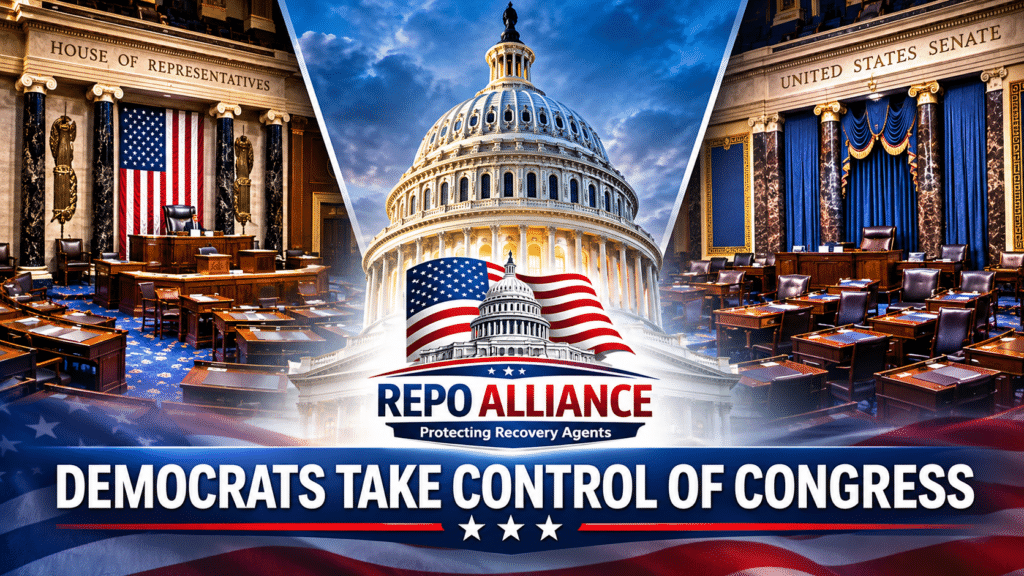
Democrats take control of Congress, setting the stage for new leadership, legislative battles and increased oversight.
Midterm Elections Flip Both Chambers of Congress for Democrats
This week, Americans participated in the midterm elections to elect federal, state, and local leaders. Though many states are still counting ballots before races can be certified, Democrats have taken control of both the United States Senate and House of Representatives by sizeable margins. They will have at least 54 seats in the Senate, with the possibility of having as many as 56. In the House, NBC News estimates Democrats will likely have between 255 and 260 seats.
For his part, President Trump had told Republicans to “pretend I am on the ballot,” as a way to boost turnout. He criticized many Republican candidates for not embracing him or his record. He was said Democrats “did a good job” in their races and he “accepts the results”, and expressed his belief that the next two years he will make a lot of deals with Democrats and use his veto authority often.
120th House and Senate Leadership
Hakeem Jeffries (D-NY) is now in line to become Speaker of the House. He will be the first Democrat to lead the full House other than Nancy Pelosi since 1995. During a press conference today, Jeffries noted House Minority Whip Katherine Clark (D-MA) will run for majority leader, Democratic Caucus Chairman Pete Aguilar (D-CA) is expected to be the incoming majority whip, and Vice Chair Ted Lieu (D-CA) was referred to as the future chair of the Democratic caucus. House Democrats will hold their leadership elections November 18-19. The speaker’s election is among the first votes of the new Congress and will be held on January 3, 2027.
On the Republican side, House Speaker Mike Johnson announced this morning that he will be stepping aside from Republican Party leadership. Freedom Caucus founder and current Judiciary Committee Chairman Jim Jordan (R-OH) will run against Majority Leader Steve Scalise (R-LA) to be minority leader.
GOP Whip Tom Emmer (R-MN) and Rep. August Pfluger (R-TX) are vying for the Republican Whip job. House Republicans plan to hold their leadership elections next Tuesday.
In the Senate, Chuck Schumer (D-NY) has announced he is running to remain Democratic leader and is so far running unopposed to become Majority Leader. Senator Brian Schatz (D-HI) is expected to be elected Majority Whip following the retirement of current Democratic Whip Richard Durbin (D-IL). Senate Democrats are expected to hold their leadership elections the week of November 16. On the Republican side, Senate Majority Leader John Thune is expected to run for GOP leader again but has not yet formally announced his intentions. Senate Republicans plan to hold leadership elections on November 10.

Changes to Key Committee Leadership and Membership
At the key Committees, significant changes are coming with Democrats taking control of gavels and the elections creating a variety of vacancies. Most significantly, Sen. Collins’ (R-ME) loss sets up a race for Ranking Member on the Appropriations Committee and Sen. Cassidy’s (R-LA) primary loss opens up the Ranking Member slot at the Senate Health, Education, Labor and Pensions (HELP) Committee. Sen. Murkowski (R-AK), a member of Appropriations and HELP, is a contender to take either of the top Republican Committee positions (Senate caucus rules prohibit her from having both). Should she pick Appropriations, that could tee up Sen. Paul (R-KY) or Sen. Hawley (R-MO) to be the top Republican at the Senate HELP Committee. Here are the likely leadership spots on relevant committees.
Senate Banking, Housing, and Urban Affairs
Expected Chair: Sen. Warren (D-MA). Senator Sherrod Brown (D-OH) formerly chaired the committee until 2024 when he was defeated for re-election. His interrupted service restarts his seniority on that committee.
Expected Ranking Member: Sen. Tim Scott (R-SC)
Open Committee Slots: Sens. Tillis (R-NC) and Tina Smith (D-MN).
Senate Environment and Public Works
Expected Chair: Sen. Merkley (D-OR) and Sen. Markey (D-MA) will seek the gavel if Sen. Whitehouse (D-RI) chooses Judiciary, which is likely.
Expected Ranking Member: Sen. Moore Capito (R-WV)
Open Committee Slots: Sens. Husted (R-OH) and Graham (R-SC), as potentially Sen. Sullivan (R-AK), whose race is too close to call.
Senate Finance
Expected Chair: Sen. Wyden (D-OR)
Expected Ranking Member: Sen. Crapo (R-ID)
Open Committee Slots: Sens. Cornyn (R-TX), Cassidy, Daines (R-MT), Tillis (R-NC), Blackburn (R-TN), and Marshall (R-KS) are not returning next year. On the Democratic side, Sen. Smith (D-MN) is the only Senator who is not returning to the Committee in January.
Senate Judiciary
Expected Chair: Sen. Whitehouse (D-RI)
Expected Ranking Member: Sen. Lee (R-UT)
House Energy and Commerce
Expected Chair: Rep Pallone (D-NJ) is expected to become chair with Rep Guthrie (R-KY) becoming the Ranking Member. Rep. Castor (D-FL) is expected to become the chair of the Health Subcommittee with Rep Griffith (R-VA) becoming Subcommittee Ranking Member.
Expected Ranking Member: Rep. Guthrie (R-KY)
Expected Health Subcommittee Chair: Rep Castor (D-FL) or Rep. Ruiz (D-CA)
Expected Health Subcommittee Ranking Member: Rep Griffith (R-VA)
Open Committee Slots: Reps Hudson (R-NC), Carter (R-GA), Dunn (R-FL), Crenshaw (R-TX), Miller-Meeks (R-IA), James (R-MI), Kean (R-NJ), and Evans (R-CO) will not be returning in January. As of press time, Rep. Obernolte’s (R-CA) race has not been called. On the Democratic side, Reps. DeGette (D-CO), Schakowsky (D-IL), Veasey (D-TX), Kelly (D-IL) will not be returning next year. As of press time, Rep, Matsui (D-CA) and Darren Sotos’ (D-FL) races have not been called.
House Financial Services Committee
Expected Chair: Rep. Maxine Waters (D-CA), though Rep. Sean Cast en (D-IL) will challenge her.
Expected Ranking Member: Rep. French Hill (R-AR), if he holds on to the lead in his race, would likely remain as top Republican.
House Judiciary
Expected Chair: Rep. Raskin (D-MD)
Expected Ranking Member: Current Chairman Jim Jordan (R-OH) is running for Republican Leader of the House. Several Republicans are jockeying for that spot, including Rep. Fitzgerald (R-WI) and Rep. Lee (R-FL)
House Transportation and Infrastructure
Expected Chair: Rep. Rick Larsen (D-WA)
Expected Ranking Member: Rep. Sam Graves (R-MO)
House Ways and Means
Expected Chair: Rep. Neal (D-MA)
Expected Ranking Member: Rep. Smith (R-MO)
Open Committee Slots: Reps Buchanan (R-FL), Schweikert (R-AZ), Arrington (R-TX), Hern (R-OK), Fitzpatrick (R-PA), Feenstra (R-IA), Carey (R-OH), Miller (R-OH) are not returning. As of press time. Reps. Murphy (R-NC) and Moore’s (R-UT) races have not been called. On the Democratic side, Reps. Doggett (D-TX), Larson (D-CT), Davis (D-IL), Evans (D-PA) are not returning. Rep. Thompson (D-CA) and Suozzi’s (D-NY) races have not yet been called.
Democratic Priorities for the 120th Congress
Looking ahead to the 120th Congress, we expect Democrats to devote significant attention to oversight of the Administration. Tweets last night—including just the word “Subpoenas” from incoming Senate Finance Committee Chair Ron Wyden (D-OR)—signal that oversight will be a central priority.
We also expect Democrats to pursue changes to the One Big Beautiful Bill, including efforts to repeal or modify work requirements for the Medicaid expansion population and caps on student loan borrowing. Without a 60-vote Senate majority, Democrats may seek to advance eligible provisions through the budget reconciliation process. Even if those measures pass Congress, however, they would face likely presidential vetoes. Overriding a veto would require a two-thirds majority in both chambers, creating a substantial barrier to enactment.
Lame Duck Scenarios
Prior to the Senate and House adjourning in September, leadership of both parties in both chambers had expressed a desire for a constructive lame duck session when the Congress reconvenes after the elections, regardless of their results. On that list of legislative priorities would be 12 appropriations bills, a bipartisan health care package, a National Defense Authorization Act (NDAA), and a host of other matters that often get wrapped up in a year-end package. Democratic leaders at that time had preferred to “clear the decks” during the lame duck session so the first months of the new Congress could be focused entirely on their agenda rather than undertaking the arduous task of completing “last year’s work.” As recently as last week, we heard from top Democratic committee staff that chamber leaders have instructed committee staff to “be prepared” to pass major bills in the lame duck—if the political environment allows it.
However, this week’s election results have some Democrats in both chambers rethinking their approach, and they are considering delaying much of their lame duck work until next year when they hold the pen to write these key bills. As a result, a few different scenarios could unfold during the lame duck session:
- Congress completes some appropriations bills and extends funding for others into next year. More difficult bills, such as Labor-HHS-Education and Defense, could require negotiations that extend beyond the time available during the lame duck session. In this scenario, Congress could pass continuing resolutions (CRs) for the remaining bills and attach short-term extensions of expiring health provisions for the duration of those CRs. Broader legislation unrelated to the appropriations process could be deferred until next year.
- Congress completes all twelve appropriations bills and includes other matters. This could occur through several smaller packages, commonly called “minibuses.” Completing the bills would give Democrats a clean slate in January while offering Republicans and departing Members an opportunity to secure final legislative accomplishments. Whether both parties have the appetite—and sufficient time—for such an extensive legislative effort remains uncertain.
- Congress passes a long-term CR with extensions of expiring provisions. This approach would likely leave broader health policy legislation, NDAA, and other extraneous bills for next year. We anticipate Democratic resistance to a long-term CR because of concerns that the Administration could use it as an opportunity to rescind additional funding. Nevertheless, it remains a possible outcome if negotiations stall.
The path forward should become clearer when Members return to Washington next week and congressional leaders assess their priorities and willingness to negotiate. We will also be closely watching how next week’s internal lame duck strategizing may reflect larger dynamics facing Democratic leadership in the House and Senate during the 120th Congress.
FMCSA New Guidelines on Driver Training Records
Recently, the Federal Motor Carrier Safety Administration proposed to modify its regulations regarding entry-level driver training records. FMCSA requests approval to renew an ICR titled, “Training Certification for Entry-Level Commercial Motor Vehicle Operators,” which will continue to be used to register providers of entry-level driver training and to provide State Drivers’ Licensing Agencies with information on individuals who have completed said training. If approved, this renewal will allow FMCSA to continue to collect information on registered training providers and entry-level driver training certification information until 2030.
According to FMCSA, “safety regulations require minimum training standards for entry-level drivers, and include two separate information collection actions: (1) Training providers must electronically submit information to FMCSA’s Training Provider Registry (TPR) to ensure that they meet the new training provider eligibility requirements and may therefore be listed on a new TPR; and (2) after an individual driver-trainee completes training administered by a training provider listed on the TPR, that training provider must electronically submit training certification information regarding the driver-trainee to the TPR. While there have been a number of regulatory actions delaying compliance with these requirements, all have been in effect since February 7, 2022. The information collection estimates included in this renewal action are based on actual data from the TPR and from training certification transactions over the past year.”
Repo Alliance – This Week in Washington 11-09-2026 – Repo Alliance – This Week in Washington 11-09-2026 – Repo Alliance – This Week in Washington 11-09-2026
WHO IS REPO ALLIANCE?
Repo Alliance Washington Update: The Week That Shaped Auto Finance – Repo Alliance Washington Update: The Week That Shaped Auto Finance – Repo Alliance Washington Update: The Week That Shaped Auto Finance
How and when was the group formed?
The initiative started several weeks ago with an invitation from ARA to all National and State Associations and other major industry leaders.
Is the Repo Alliance another association?
NO! The Repo Alliance is a collaborative effort of the groups which decided to answer the call and develop a fundraising program to further the interests of OUR industry and provide a voice at both National and State levels.
Which organizations came together?
American Recovery Association (ARA), the California Association of Licensed Repossessors (CALR), Texas Accredited Repossession Professionals (Texas ARP), and Harding Brooks Insurance.
How do you contribute?
- A Square account has been established.
- Click here to donate through Square.
- Champion, Promote and Spread the word about this industry initiative!
Can I use any other method to contribute?
YES, you can mail a check, payable to Repo Alliance at 1400 Corporate Dr., Suite 175, Irving, TX, 75038.
Will funding reports and expenditures be available for review?
- YES, this initiative will be completely transparent on monies raised with information available on the website.
- One hundred percent of all monies raised will be used to pay for lobbying efforts. Everyone involved other than the lobbyist is a volunteer.
Why hire a dedicated lobbyist instead of just working with other lobbying groups?
We are working with other industry lobbyist groups but have realized without OUR OWN VOICE, we would be trusting the future of the Recovery Industry to the priorities of others. Riding the coattails of these other groups, puts our agenda as simply an afterthought.
What are the GOALS?
- Change the negative, reputational image of the Recovery Industry.
- Educate legislatures of the vital role we play.
- Fight against language in bills or guidance from agencies that would decimate the recovery industry.
Contact Us
833-737-6255
833-REPOALL
CFPB Still Under the Microscope – CFPB Still Under the Microscope – CFPB Still Under the Microscope
Related:
CFPB Still Under the Microscope
Washington Takes Aim at the CFPB: What Auto Finance Needs to Know
Federal Shutdown Threat Puts Repossession Moratorium Back on the Radar
Federal Government Shutdown Triggers Repossession Moratorium!
Repo Alliance Washington Update: The Week That Shaped Auto Finance
Washington Shifts the Playing Field for Auto Finance
Washington Gridlock Meets Financial Data Reform
The Policy Changes That Could Shape Tomorrow’s Repossession Market
When the Watchdog Leaves: What a Smaller CFPB Could Mean for Repossession
Repo Alliance – Washington Shifts Could Reshape Repo Volume and Compliance Risk
Washington in Motion: What New Federal Actions Mean for Auto Finance and Repossession
Repo Alliance – This Week in Washington – March 2026
The Repo Alliance: Giving a Voice to a ‘Ghost’ Industry in Washington
Repo Alliance Progress & Updates from May DC Meeting
Repo Alliance – Let’s Not Lose our Minds
How Does the “One Big Beautiful Bill Act” Affect the Repo Industry?
Repo Alliance – This Week in Washington 11-09-2026 – Compliance – Repossess – Repossession – Repossession Agency – Repossessor – Repossession – Repossession News




More Stories
New On Hook Episode: A Conversation with Jeremy Cross
Recovery Agencies Are One Click Away from a Cybersecurity Disaster
The Money Conversation Continues: NARS Panel Returns for Round Two
Conflicting Repo Rulings Prompt ARA Call for Industry Reform
New On Hook Episode: A Conversation with Bahador Rahimi
Meet Otto: Your New AI Assistant in Clarity