

Why Personal Property Shortcuts May Create Serious Exposure Across the Recovery Chain
GUEST EDITORIAL
To the Lending, Forwarding, Servicing, and Recovery Community:
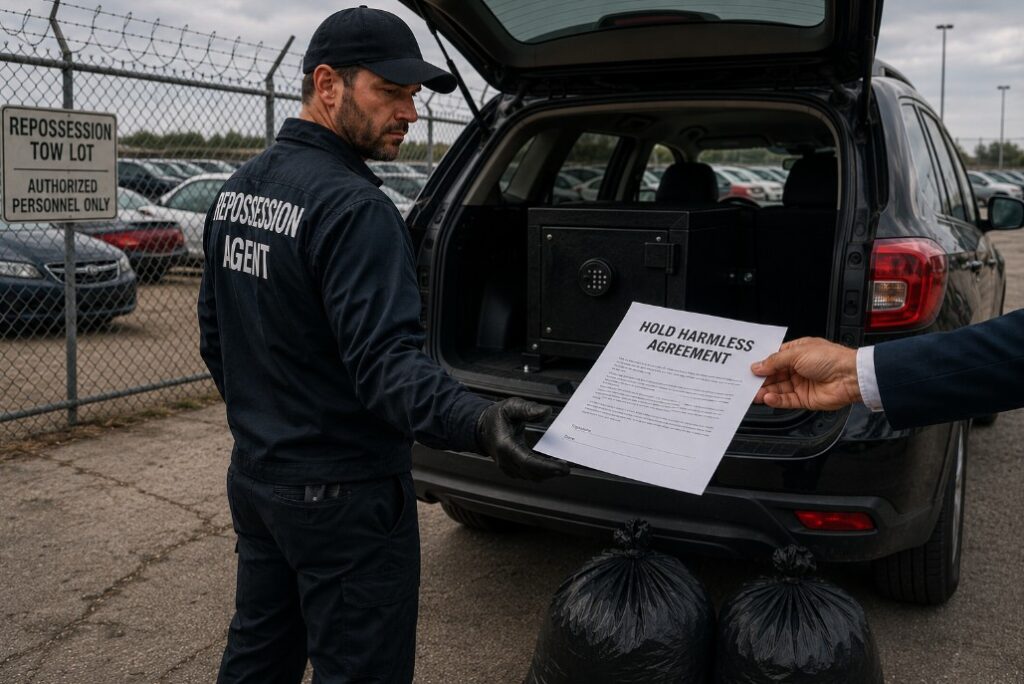
We believe it is important to address a growing industry practice involving personal property (“personal effects”) handling during repossession activity, particularly where repossession agencies are instructed or pressured to release collateral without conducting a complete personal property inventory due to locked or inaccessible compartments such as trunks, glove boxes, center consoles, toolboxes, safes, or similar areas.
In some instances, repossession agencies are being offered “hold harmless” agreements or indemnification requests in exchange for bypassing or abbreviating personal property procedures otherwise required under applicable laws, regulations, licensing standards, or established consumer protection practices.
While operational expediency may appear commercially attractive, we strongly encourage lenders, forwarders, servicers, and recovery vendors to carefully evaluate the substantial legal, regulatory, and reputational risks associated with these practices.
Repossession agencies and secured creditors operate within a heavily regulated consumer financial services environment where the handling, safeguarding, documentation, storage, and return of consumers’ personal property may implicate numerous legal and regulatory obligations.

Importantly, private agreements between contracting parties generally do not supersede statutory duties, consumer protection obligations, licensing requirements, or regulatory expectations imposed under federal or state law.
Accordingly, where parties knowingly agree to bypass established personal property handling procedures, multiple areas of potential exposure may arise, including but not limited to:
- Consumer complaints involving missing, lost, damaged, or unreturned personal property
- Claims for conversion, negligence, wrongful possession, bailment liability, or improper disposition of consumer property
- Allegations of unfair, deceptive, or abusive acts or practices (UDAAP) under federal consumer protection standards
- Potential scrutiny from the Consumer Financial Protection Bureau (CFPB), state attorneys general, licensing authorities, or other regulators
- Regulatory and evidentiary concerns arising from incomplete inventories, undocumented inaccessible compartments, or inconsistent property handling procedures
- Contractual, compliance, and reputational exposure involving lenders, servicers, forwarding companies, and recovery vendors
- Aiding-and-abetting, joint enterprise, or civil conspiracy allegations where multiple parties knowingly participate in practices designed to circumvent established consumer protection safeguards
The concern becomes particularly acute where:
- Parties understand legal or regulatory obligations exist.
- A conscious decision is made to avoid full compliance.
- And operational directives, indemnification requests, or procedural shortcuts are utilized to bypass consumer protection safeguards or documentation standards.
Further, “hold harmless” provisions generally allocate risk between contracting parties; however, such agreements do not necessarily extinguish statutory duties owed to consumers, nor do they insulate parties from regulatory scrutiny, administrative enforcement, consumer complaints, or third-party civil claims.
The repossession, servicing, and lending industries operate in an increasingly scrutinized regulatory environment where consumer protection expectations continue to expand at both the federal and state levels. Practices that may once have been viewed as operational accommodations can now carry materially different compliance, litigation, and reputational implications.
We therefore encourage all industry participants to:
- Review current personal property handling procedures.
- Evaluate contractual directives relating to inaccessible compartments.
- Ensure policies align with applicable consumer protection standards and legal obligations.
- Maintain clear documentation and chain-of-custody procedures, and seek competent legal counsel regarding compliance obligations and risk exposure.
Our collective industries are best protected through transparency, consistent documentation, statutory compliance, and meaningful consumer safeguards.
The Liability No One Can Contract Away – The Liability No One Can Contract Away – The Liability No One Can Contract Away
Joshua Niles
Owner,
Absolute Solutions
The Liability No One Can Contract Away – Compliance – Forwarder – Transport – Repossess – Repossession – Repossession Agency – Repossessor – Repossession – Locksmith – Transport – Transport – Auction – Auction





More Stories
The Repos That May Never Come
A Repossession Is a Repossession
When “Partner” Is Just Another Word for Vendor
Welcome to the Repossession Casino — But Who Is Really Paying the Losing Bets?
The Cost of Doing Business: Why We Cannot Afford to Work for Free
The Insurance Barrier: When Tow and Repo Try to Cross the Line