



…every experienced agent has at least one story where they stopped, looked at the situation, and thought: “Not like this.”
What ultimately separates a repossession that happens from the one that doesn’t isn’t just policy or paperwork; it’s judgment in the moment, weighed against consequence. Every decision carries ripple effects: for the borrower, for their family, and for the agent who has to live with it afterward. And that raises a moral industry question: just because you can, does it mean you should?
The best agents know this isn’t a mechanical job; it’s a human one.
Why Some Agents Still Ignore the Danger
If the risks are this obvious, guns, vehicles used as weapons, unpredictable confrontations, then why do some agents still push forward when every instinct says back off?
Because in this business, pressure comes from every direction at once.
- The Pay Structure Rewards Completion
Most repo agents are paid per recovery, not per attempt.
- No hook = no pay
- Fuel burned, time spent, nothing earned
That creates a dangerous internal calculus:
“I’ve already got time and money in this… I need to finish it.”

And that mindset can override caution.
- The Clock Is Always Ticking
Assignments aren’t static.
- Another agent might grab it
- The debtor might move the vehicle
- The account could be reassigned
That urgency pushes agents to act now, even when conditions aren’t ideal.
- Reputation Matters
Within the industry, agents build reputations fast:
- “Gets it done”
- “Doesn’t miss”
- “Will go anywhere”
That reputation can bring more volume, but it can also push agents into situations they should probably walk away from.
Because no one wants to be labeled:
“The guy who leaves cars behind.”
- Experience Can Create Overconfidence
Ironically, the more an agent survives risky situations, the more normal they become.
- “I’ve seen worse.”
- “This is nothing.”
Until one day, it isn’t.
- Adrenaline Is Real
There’s no way around it: repo work has an edge.
- Tense interactions
- Night recoveries
- Tight maneuvers
- Split-second decisions
For some, that intensity becomes part of the job’s appeal.
But adrenaline doesn’t always lead to good judgment.
When It Just Doesn’t Feel Right
Not every “no” comes from fear.
Some come from something harder to define, and harder to ignore.
Call it instinct. Call it conscience.
Call it the moment when the job collides with humanity. Sometimes the best agents are the ones who know when not to be one.
Just because you can does not mean you should.
The Funeral Repo
It’s happened more than most people realize.
An agent locates a vehicle… only to realize it’s part of a funeral procession or parked at a service.
Technically, the recovery might be legal.
But standing there, watching a family bury someone, most seasoned agents won’t touch it.
Because no one forgets that moment, on either side.
“You can come back tomorrow. They can’t redo today.”
When Illness Changes Everything
There’s a moment that hits differently than anger, threats, or chaos.
It’s quiet.
An agent approaches a vehicle expecting the usual, maybe confrontation, maybe nothing at all. Instead, they find something else entirely:
- A borrower struggling to breathe
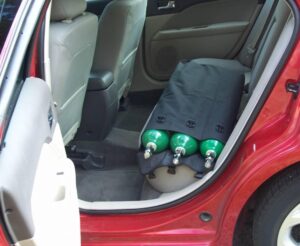
- Oxygen tanks in the back seat
- Medical equipment where groceries should be
- A person who can barely stand, let alone argue
Or worse…
A family gathered. Not in conflict, but in crisis.
For the agent; it’s only a car. Only a commission.
For the borrower and family, it is a moment. A moment they are at their weakest, their most vulnerable.
For both, it can be a moment of impact. Be it for good or for profit, it can be a moment never forgotten by either.
The Repo That Feels Like Something Else
In these situations, the vehicle isn’t just transportation.
It’s:
- A way to get to treatment
- A lifeline to doctors, dialysis, chemotherapy
- The only means of maintaining what little stability remains
And suddenly, the assignment shifts.
This isn’t about risk anymore. It’s about impact.
“If I take this… what happens next?”
The Disabled Driver’s Vehicle
A van with a wheelchair lift. Hand controls. Medical gear inside.
Yes, it may be in default.
But it’s not just transportation, it’s mobility, independence, survival.
Many agents pause here.
Some still proceed, because contracts and clients demand it.
Others step back, make a call, or request guidance.
Because this isn’t just collateral.
It’s someone’s ability to function in the world.
The Car That’s a Home
More common than people think.
Agents open a door expecting clutter… and find:
- Clothes neatly stacked
- Blankets
- Food containers
- A lifetime of possessions sitting in a back seat
At that point, the vehicle isn’t just an asset.
It’s shelter.
And taking it doesn’t just create inconvenience; it creates immediate displacement.
Some agents still hook it. Others walk away, or at least delay.
Because the reality hits fast:
“This isn’t a repo. This is an eviction on wheels.”
The Line No One Can Define, But Everyone Knows
There’s no universal rulebook for these moments.
No checkbox that says:
- Funeral → decline
- Disabled vehicle → escalate
- Occupied vehicle → pause
- Illness = stop
It all comes down to the person behind the wheel of the tow truck.
Some push through. Some step back.
But every experienced agent has at least one story where they stopped, looked at the situation, and thought:
“Not like this.”
The Quiet Decisions That Never Make the News
The public hears about:
- Shootings
- Assaults
- Violent confrontations
They don’t hear about the repos that never happened.
The ones where an agent:
- Backed out slowly
- Dropped the car
- Drove away
No report. No headline. No payment.
Just a decision.
The Weight
In many cases, that decision is what separates a long career from a short one.
And in many more, the weight of that decision is one that they carry around with them for the rest of their lives. I know from experience.
Choose well.
Kevin Armstrong
Publisher
When the Repo Man Says No – When the Repo Man Says No – When the Repo Man Says No
When the Repo Man Says No – Repossession Violence – Repossession History – Repossession – Repossess – Repossession – Repossession Agency – Repossessor






More Stories
NY Repo Agent Allegedly Beaten and Put in Chokehold
Why Fight LPR? Join It — But What Happens When the Car Repossesses Itself?
Bail Collateral Repo Turns Into 100-MPH Fugitive Chase
In The Future Will There Be Anyone Left to Recover Vehicles?
“Repo Man” Arrested After Alleged Wrongful Repossession
The Broken Bond Between Lenders and Agents – Positive Resolution