


New ACERTUS Verification Procedures Raise Concerns Among Recovery Agents
GUEST EDITORIAL
A recent vehicle release notice tied to ACERTUS and Metrogistics has sparked growing discussion throughout the repossession industry after recovery agencies were instructed to perform extensive transporter verification procedures prior to releasing vehicles for transport.
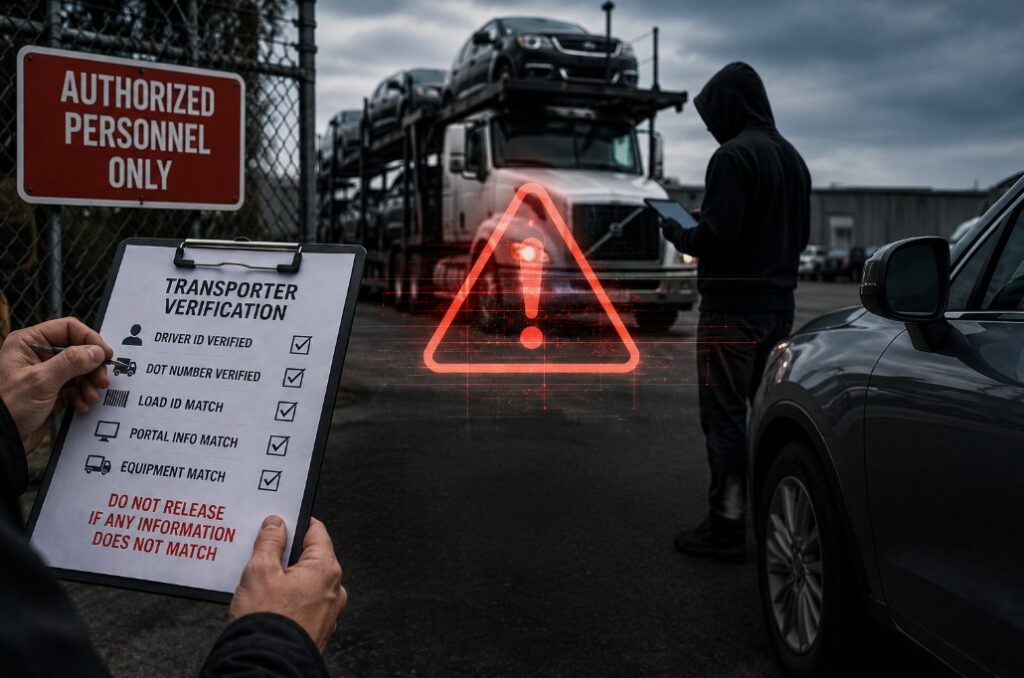
Under the updated process, release agents are now expected to verify driver identities, confirm DOT information, authenticate digital load data through a portal, validate app-based pickup credentials, and ensure transporter information matches the equipment presented at pickup.
The notification specifically instructed agencies not to release vehicles if any discrepancy exists between the carrier, driver, portal information, or VINlocity transport application.
For many repossession agencies, however, the issue is larger than the verification process itself.
The concern being voiced throughout the industry is that transportation fraud — a problem that originated within broker, carrier, and logistics systems — is increasingly becoming the operational responsibility of the repossession agent physically holding the vehicle.
A Problem That Has Been Growing for Years
Transport fraud is not new.
Industry professionals say fraudulent carriers, double-brokering schemes, stolen DOT identities, falsified insurance documents, and vehicle theft operations have been quietly expanding across the automotive transport sector for years.
Most incidents historically appeared concentrated around dealership inventory, auction movements, and high-end vehicle transportation. However, repossession agencies have long warned that the same vulnerabilities could eventually impact recovery operations, particularly as repossessed collateral increasingly moves through third-party transport networks after recovery.
Over the last several years, transporter fraud has repeatedly surfaced as a major discussion point at industry conferences, lender meetings, auction panels, logistics forums, and recovery association events.
More recently, attendees at the 2026 Used Car Industry Summit reportedly described transport fraud as one of the most pressing unresolved operational issues affecting auctions, brokers, transporters, and remarketing companies.
Yet despite years of discussion, warnings, and conference panels, many repossession professionals say little meaningful progress has actually materialized.
Discussions Continue — Solutions Do Not
Recovery agents argue that the industry response has largely centered around adding additional verification layers at the release point rather than solving the vulnerabilities inside transportation broker systems themselves.
Instead of systemic improvements, agencies say they are increasingly being tasked with performing fraud prevention duties that extend far beyond traditional repossession work.
Today, many release agents are now expected to:
- Authenticate driver identities
- Validate DOT numbers
- Verify digital dispatch information
- Review app-based pickup systems
- Confirm carrier credentials
- Match transport equipment to portal data
- Navigate multiple verification platforms during live pickups
For many smaller agencies, these responsibilities create additional labor, operational delays, staffing burdens, and liability exposure — all without additional compensation.
Several operators have openly questioned whether recovery agencies are slowly becoming the “last line of defense” for fraud issues originating elsewhere in the transportation chain.
Broker Changes Created Sudden Operational Shifts
Another growing frustration within the repossession industry is how quickly these changes appeared.
Several agencies report that lenders, auctions, and remarketing companies quietly shifted transportation brokers or logistics providers over the past few years. In many cases, repossession agencies only discovered the changes after new pickup procedures suddenly appeared during active releases.
Without notice, long-standing release processes were replaced with digital portals, app-based verification systems, additional compliance steps, and expanded documentation requirements.
At the field level, agencies say these changes create real-world complications.
Release agents are often forced to make rapid decisions during live transporter pickups while balancing chain-of-custody concerns, borrower interactions, storage operations, transport scheduling, and now increasingly sophisticated fraud risks.
The Liability Question
Many recovery professionals agree that fraud prevention is necessary. The concern is whether liability is quietly shifting downstream onto the repossession agency.
If a fraudulent carrier successfully obtains a vehicle after an agency completes all required verification steps, operators question who ultimately bears responsibility for the loss.
Some agencies fear that documented verification procedures may later be used to argue that the release location accepted responsibility for validating the legitimacy of the transport transaction itself.
That concern becomes even more significant as criminal operations continue evolving.
Industry alerts over the last several years have highlighted increasingly sophisticated schemes involving cloned carrier identities, manipulated dispatch systems, spoofed communications, stolen DOT credentials, and fraudulent insurance certificates designed to appear legitimate during vehicle pickups.
Industry Warnings Have Been Ongoing
The repossession industry has not been silent about these concerns.
Organizations including the American Recovery Association and trade outlets such as CURepossession.com have repeatedly highlighted transporter fraud risks and evolving vehicle theft schemes tied to the automotive logistics space.
Recent industry coverage included:
The consistent theme across those discussions has remained largely unchanged: the fraud problem continues evolving faster than the industry’s ability to implement unified security standards capable of stopping it.
Repossession Agencies Increasingly Caught in the Middle
At present, widespread transporter fraud directly targeting repossession agencies still appears relatively limited compared to dealership and auction losses.
However, many in the recovery industry believe the exposure risk is growing rapidly.
As lenders, auctions, brokers, and logistics providers continue tightening procedures, repossession agencies increasingly find themselves caught between operational compliance expectations and liability concerns tied to systems they do not control.
For now, many recovery professionals say the industry continues holding discussions, issuing alerts, and layering on new procedures — but still lacks a clear, standardized, and effective long-term solution to the underlying fraud problem itself.
James Waldron
CEO of 1st Adjusters, Inc.
Transport Fraud Pressure Begins Shifting Toward Repossession Agencies – Transport Fraud Pressure Begins Shifting Toward Repossession Agencies – Transport Fraud Pressure Begins Shifting Toward Repossession Agencies
Transport Fraud Pressure Begins Shifting Toward Repossession Agencies – Repossess – Repossession – Repossession Agency – Repossessor – Repossession – Fraud – Fraud – Transport





More Stories
The Cost of Doing Business: Why We Cannot Afford to Work for Free
The Insurance Barrier: When Tow and Repo Try to Cross the Line
Everyone Wants a Safe Repossession. Nobody Wants to Pay for One
The Industry We Built and the Standards We Must Protect
The Secret Recipe Isn’t Ours to Keep
What Happens When Repo Discovers Towing?