


Opry Mills security officials claim license plate data is being used by repossession companies. But they are probably missing the simpler explanation.
Nashville, TN — October 25, 2026 — The paranoia surrounding LPR usage has reached a new height. A Nashville shopping mall’s security director has made claims that the Mall’s own license plate recognition (LPR) data is being shared with repossession companies. This, of course, is prompting questions about surveillance, privacy and the commercial use of information collected from shoppers.
But there is probably a much simpler explanation.
According to an October 24 WSMV4 report, Richard Siegelman, head of security at Opry Mills, told a Metro Nashville commission that license plate information captured at the shopping center is shared with repossession companies.
Siegelman also reported that approximately three or four vehicles are repossessed from the mall’s parking lots each week, often leaving shoppers initially believing their vehicles have been stolen.
“Honestly, my mall averages probably about three or four a week of people that come to us and say, ‘Hey, my car got stolen.’ And then come to find out after talking to them for a little bit, it’s they’ve been missing their car payments and they got repo’d,” Siegelman told the commission.
The comments have raised questions about whether privately collected surveillance information is being provided to companies involved in vehicle repossessions.

Questions About Who Has Access
WSMV reported that it made multiple attempts to contact Siegelman for clarification about the surveillance and alleged data sharing. The station also contacted Simon Property Group, which owns Opry Mills, seeking information about whether the mall sells license plate data to outside entities.
The report did not establish whether the mall has a contractual arrangement allowing repossession companies to access its LPR records, nor did it identify a data provider or document an actual transfer of information.
Nashville Mayor Freddie O’Connell also addressed the broader concerns surrounding license plate recognition technology, noting that although it can serve legitimate public safety purposes, the systems are not infallible.
“I actually shared with the state Attorney General a scenario that actually I had been falsely targeted by private parking operators LPR,” O’Connell said.
“Falsely targeted by private parking operators LPR?” Targeted for what, exactly? The report doesn’t explain.
Adam Schwartz, a privacy expert with the Electronic Frontier Foundation, told WSMV that public attention to LPR technology has increased considerably over the past year.
Schwartz explained that retention and sharing practices differ among operators, with some retaining records for days and others for years. He also raised concerns about the potential commercial exploitation of vehicle-location information.
Under Tennessee law, government agencies generally cannot retain LPR data longer than 90 days unless an exception applies, including records associated with ongoing investigations. Those statutory restrictions do not apply in the same manner to privately operated systems.
WSMV also sought clarification from Metro Nashville Police about whether the department can access Opry Mills’ license plate information. The station reported that it had not received a response at the time of publication.
What the Repossession Industry Already Knows
The allegations raise legitimate questions about access to privately collected LPR information. Commercial data-sharing arrangements are technically possible, and the permissions governing privately owned surveillance systems can vary considerably.
However, the reported number of repossessions at Opry Mills does not, by itself, establish that the mall’s camera system played any role in locating those vehicles.
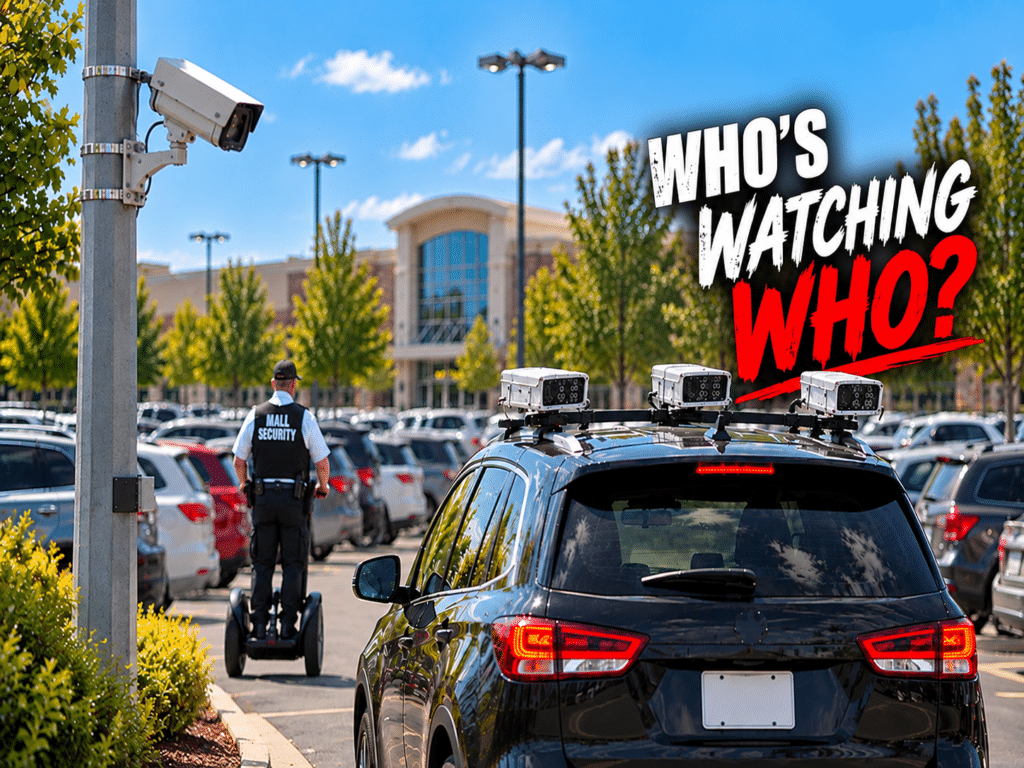
For years, repossession companies have used mobile LPR technology to locate vehicles assigned for recovery. As anyone in the repo industry knows, camera-equipped vehicles routinely travel through shopping centers, commercial parking areas and public streets, collecting license plate information independently of surveillance systems operated by property owners.
None of these operations requires access to a shopping mall’s surveillance equipment or privately maintained license plate database.
There is no publicly established evidence in the WSMV report demonstrating that the repossessions described by Siegelman resulted from information supplied by Opry Mills’ cameras. Nor has evidence been presented disproving his reported assertion that data sharing occurs.
The question remains open.
But before they drawing conclusions that the access is being shared, perhaps there is another possibility worth their consideration.
Did it ever occur to anyone that the LPR cameras mounted on repossession trucks and camera cars might simply have been gathering their own data?
Mall Security Claims Repo Companies are Accessing Their LPR Data – Mall Security Claims Repo Companies are Accessing Their LPR Data – Mall Security Claims Repo Companies are Accessing Their LPR Data
Mall Security Claims Repo Companies are Accessing Their LPR Data – LPR – Data – Data – Repossess – Repossession – Repossession Agency – Repossessor – Repossession – Repossession News – Police – Police





More Stories
Indiana Repossessor Arrested in Alleged Attempted Kidnapping of Teenage Girl
Hooked, Lifted, and Still Not Yours: Federal Court Rules Against Georgia Repossessor
LPR Helps Rescue Child from Alleged Human Trafficker
Myles Weiss: Remembering a Man Who Helped Build the Repossession Industry
Five Charged in $3 Million Houston Luxury Vehicle Theft and Export Scheme
Texas Repo Turns into Armed Standoff, Two Arrested