



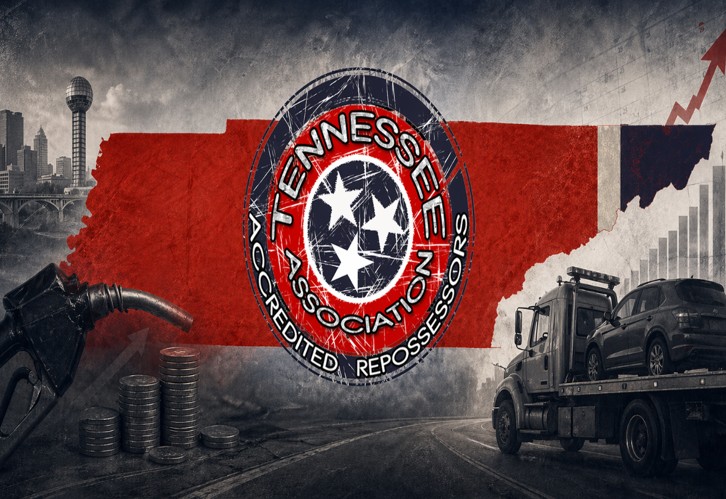
Without Change, Performance Will Change
Fuel Costs, Inflation, and the Need for Strategic Alignment
Following the recent State Association Panel at NARS 2026, the Tennessee Association of Accredited Repossessors is continuing critical discussions with our clients, forwarders, and direct lenders regarding the economic pressures impacting the repossession industry.
These conversations are not theoretical. They are rooted in measurable data and real time operational impact.
Current Economic Conditions
Fuel and operating costs have increased significantly across Tennessee.
Average gasoline prices are approximately $3.80 to $3.85 per gallon, reflecting a 30 percent or greater increase year over year.
Diesel fuel, which directly impacts recovery, transport, and heavy equipment operations, is averaging approximately $5.30 per gallon, with increases exceeding 50 percent year over year.
Inflation is projected to remain between 3 percent and 4 percent through 2026, continuing to drive up costs in labor, insurance, and compliance.

These increases directly affect every aspect of the recovery process from first runs to repossession to transport to final disposition.
Operational Impact
Repossession agencies are absorbing higher fuel and transportation costs, rising labor costs to recruit and retain qualified agents, and increased compliance and insurance costs.
These are not isolated pressures. They are compounding and ongoing.
The Reality Without Change
Without alignment between clients and vendors, agencies will be forced to make operational adjustments to remain viable.
This may include reducing coverage areas, limiting updates and touchpoints on accounts, prioritizing accounts based on profitability, and requesting higher fees or restructuring service models.
These are not preferred outcomes. They are necessary responses to unsustainable conditions.
A Partnership Based Approach
The relationship between a repossession company and its client, whether a forwarder or a direct lender, is a partnership.
Partnerships work together.
Partnerships support one another.
Partnerships provide structure to one another.
The current environment requires that same level of partnership now more than ever.
What TAAR Is Requesting
We are asking for open, data driven conversations regarding rate structures, transparency in expectations and performance metrics, forwarder advocacy on behalf of vendor networks, and collaborative solutions that reflect current economic realities.
This is not about short term adjustments. This is about long term sustainability and performance across the entire recovery ecosystem.
Moving Forward
The repossession industry is a critical component of the lending ecosystem.
Without sustainable operations at the agent level, the entire system is at risk.
The discussions at NARS were just the beginning.
Now is the time to turn those conversations into action.
TAAR stands ready to collaborate with all parties to build a stronger, more sustainable future for our industry.

 About TAAR:
The Tennessee Association of Accredited Repossessors (TAAR) is dedicated to supporting the repossession industry in Tennessee through education, advocacy, and professional development. We strive to equip our members with the resources they need to thrive in an ever-evolving landscape.
The Cost of Recovery Has Changed – The Model Must Follow – The Cost of Recovery Has Changed – The Model Must Follow – The Cost of Recovery Has Changed – The Model Must Follow
The Cost of Recovery Has Changed – The Model Must Follow – Repossess – Repossession – Repossession Agency – Repossessor – Repossession – State Repossession Associations – Forwarder – Fuel Costs – Gas Prices – Lending






More Stories
The Cost of Collecting LPR Data Has Gone Up. Why Hasn’t the Pay?
WHEN IS ENOUGH, ENOUGH? A Question Worth Asking Across the Repossession Industry
Three Million Repossessions: A New Measure of America’s Recovery Industry
Why Fight LPR? Join It — But What Happens When the Car Repossesses Itself?
In The Future Will There Be Anyone Left to Recover Vehicles?
The Broken Bond Between Lenders and Agents – Positive Resolution