

Dear ARA Members,
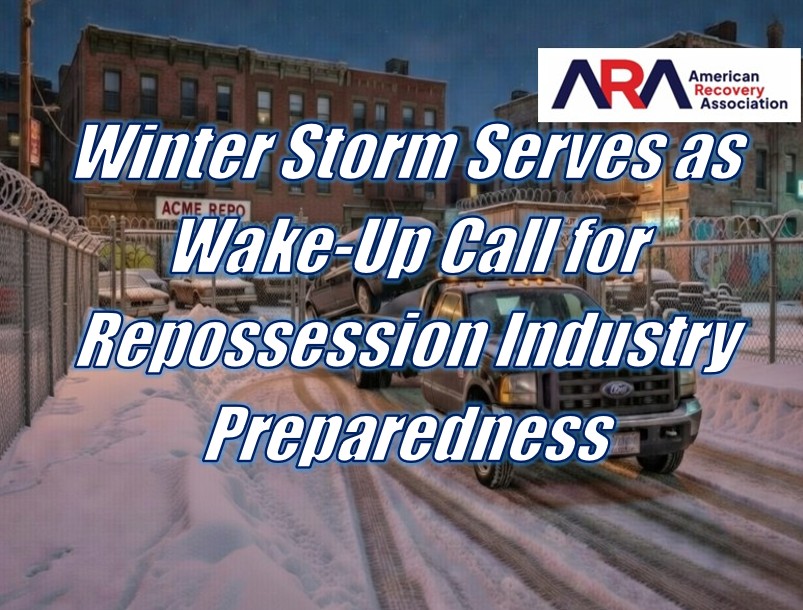
The recent winter storm should serve as a wake-up call.
For days — in some cases, more than a week — meteorologists warned that this system would be historic. Models showed record-breaking cold. Governors issued alerts. News outlets ran constant coverage. Social media was flooded with forecasts and preparation checklists. The warnings were not subtle.
And yet, when the storm hit, much of the nation was unprepared.
In the South, shelves were cleared within hours. Ice melt, snow shovels, and generators disappeared almost instantly. Infrastructure built for heat and humidity was suddenly tested by prolonged sub-zero temperatures. Roads iced over, bridges became impassable, and municipalities lacked the equipment to clear snow on a large scale. In regions unfamiliar with severe winter conditions, paralysis set in.
In the North, while more accustomed to snow, even seasoned cities were overwhelmed. Double-digit snowfall totals piled up faster than they could be removed. Plows ran around the clock with nowhere left to push the snow. Power grids, strained by prolonged extreme cold, began to fail. Ice accumulated on trees and power lines, creating cascading outages. Emergency services were stretched thin.
Preparation requires more than awareness. It requires action. It requires infrastructure built not just for average conditions, but for peak stress. It requires supply chains that can withstand surge demand. It requires contingency planning, redundancy, and realistic assessments of worst-case scenarios.
The storm exposed a gap between knowing something is coming and truly being ready for it. That gap is where risk lives — and that is exactly the lesson our industry must absorb.
The Economic Forecast Has Been Clear
The economic forecast has been clear. Auto loan delinquencies have climbed to levels not seen in more than a decade. Subprime delinquency rates have exceeded 6–7% in recent quarters.
Across many markets, repossession assignments have increased by more than 40% in the past 24 months. Vehicle prices remain elevated. Interest rates continue to strain borrowers. The cost of living remains high.
The surge in repossessions is not a surprise. The forecast has been building. The question is whether the industry is prepared before volume peaks and stress levels rise.
High-Volume Periods Create Elevated Risk
High-volume periods create elevated risk. When repossession assignments increase rapidly, several critical pressure points emerge:
Staffing Gaps
Increased workloads stretch experienced agents thin. Burnout rises. Rapid hiring during surge periods often leads to corners being cut, resulting in insufficiently trained personnel entering the field and increasing safety and compliance risks.
Insurance Liability and Exposure
Higher activity naturally increases the likelihood of accidents and claims. Agencies operating without adequate training, appropriate coverage limits, current certificates, or strong risk controls create significant financial and legal exposure across the assignment chain.
Dilution of Standards
During busy seasons, pressure mounts to onboard additional agencies quickly. Accelerated vetting, reduced oversight, acceptance of double standards, and inconsistent audits weaken compliance safeguards. Short-term volume solutions can result in long-term regulatory and reputational consequences.
These risks do not affect one entity alone. When one link in the recovery chain weakens, the entire system feels the impact.
Defined Responsibilities Across the Ecosystem
Sustainable readiness requires coordinated action.
Recovery Agencies Must:
- Invest in staffing depth and ongoing training before volume peaks.
- Maintain verified and adequate insurance coverage at all times.
- Reinforce compliance reviews, documentation accuracy, and safety protocols.
- Operate within responsible capacity limits to preserve quality.
Forwarding Companies Must:
- Maintain strict, consistent onboarding and vetting standards.
- Continue uniform audit and oversight practices during high-volume periods.
- Communicate realistic expectations regarding capacity and timelines.
- Avoid expanding networks at the expense of compliance integrity or by adopting double standards.
Lenders Must:
- Support fair compensation models that enable agencies to build infrastructure.
- Balance speed metrics with compliance and operational stability.
- Maintain one standard by partnering with properly insured, well-trained, and scalable agencies.
- Recognize that sustainable performance requires investment in long-term capacity.
A Mandatory Call to Action
The American Recovery Association (ARA) urges all agents, lenders, and forwarding partners to take immediate, coordinated action.
Preparation is not optional. Strengthening compliance is not optional. Verifying insurance is not optional. Investing in staffing and oversight is not optional.
If we wait until assignments overwhelm capacity, the consequences will not remain confined to one company or one region — they will ripple across the entire ecosystem. Regulatory scrutiny will increase. Liability exposure will grow. Hard-earned reputations will be tested. And the pressure will land on the shoulders of the very people already working long hours to keep up.
The winter storm reminded us of something simple but powerful: warnings only matter if we respond. Communities struggled not because they were unaware, but because preparation did not fully align with the forecast.
Our industry has also been given advance notice.
This is our opportunity — not to brace for impact, but to strengthen our foundation together. To align standards. To communicate openly. To support sustainable compensation and realistic expectations. To ensure that growth never comes with double standards or at the expense of safety, compliance, or integrity.
Partnership is not simply encouraged — it is required. Alignment is not aspirational — it is necessary.
The storm is forming, and preparation must begin now. This is a moment for leadership. For accountability. For unity.
We must stand together — and we must be ready.

Todd Case
ARA President
 About the American Recovery Association (ARA)
The American Recovery Association is the world’s largest association dedicated to the advancement and professional development of the recovery and remarketing industry. ARA provides education, compliance resources, and advocacy for hundreds of recovery professionals nationwide. It is also the host of the annual North American Repossessors Summit (NARS), the largest event in the industry. 🔗 Visit: repo.org | 📞 Call: (972) 755-4755
Winter Storm Serves as Wake-Up Call for Repossession Industry Preparedness – Winter Storm Serves as Wake-Up Call for Repossession Industry Preparedness – Winter Storm Serves as Wake-Up Call for Repossession Industry Preparedness
Winter Storm Serves as Wake-Up Call for Repossession Industry Preparedness – American Recovery Association – ARA – Repossess – Repossession – Repossession Agency – Repossessor – Repossession





More Stories
Meet Otto: Your New AI Assistant in Clarity
NARS 2027 Industry Award Nominations Are Open
Beyond the Camera: A New Standard for Agent Safety and Field Protection
A Million-Dollar Milestone No One Wishes Was Necessary
Policy is great – Culture is better
ARA Calls Industry Leaders to the Table Amid Historic Fuel and Operating Cost Pressures