
The Recovery Agent Protection Committee (RAPC) was established to protect recovery agents while they are in the field by examining all phases of the industry in an effort to reduce the risks agents face every day.
Since its formation, the committee has been reviewing current state laws related to assaults on individuals. Its objective is to work with existing state associations, as well as with individuals in states that do not currently have associations, to adapt or draft legislation and to lobby for enhanced and strengthened penalties under state law for injuring or attacking a repossession agent while performing their duties.
Given the current environment in the country and the growing lack of accountability for violent actions, it is critical that every possible avenue be pursued to protect industry employees.
Using limited information gathered from publications such as CU Collector and various social media platforms, it has been determined that from 2020 to the present there have been as many as 78 documented attacks against recovery agents. To date, 15 recovery agents have been killed in the line of duty.
Most recently, one agent was shot in the back, and another had a weapon held to his head while repossessing a vehicle. These incidents represent only those that have been reported; it is likely that additional attacks have gone unreported.
A recent study was conducted using data on recovery agents killed in the line of duty to identify potential risk patterns that could improve agent safety and training. The analysis examined agent and offender ages, time of day, geographic location, and the socioeconomic conditions surrounding each incident.
With assistance from a law enforcement profiler, the findings revealed no consistent or predictable pattern. Fatal attacks have occurred in high-income, low-income, and moderate-income areas, and offenders span a wide range of ages. The conclusion highlights a critical reality: every repossession carries risk. Recovery agents must remain vigilant at all times and avoid relying on assumptions related to location, timing, or demographics when assessing safety.
Research has also shown that many states currently have laws in place to protect utility workers, highway employees, and postal workers. It should be noted that postal workers are protected under federal law as well.
The committee believes it is imperative to work with state lawmakers by presenting documented evidence—such as videos, police reports, and witness statements—demonstrating the severity of the dangers faced by recovery agents. The goal is to encourage lawmakers to include repossession agents by adding to or modifying existing criminal statutes to enhance penalties for individuals who violently attack or kill an agent in the performance of their duties.
The committee is committed to educating government officials and law enforcement about the dangers recovery agents face every time they enter a recovery truck or camera car.
While acknowledging that repossessions are generally considered a civil matter, and recognizing existing CFPB rulings and applicable case law, the committee understands that these efforts will be challenging.
The request is straightforward: that the profession be recognized as a potentially hazardous occupation by both state lawmakers and law enforcement, and that assistance be provided in changing the narrative surrounding the recovery industry.
The reality is that recovery agents are placed in hazardous situations every time they leave their workplace. While the committee can draft and advocate for legislation to increase penalties for those who attack or kill a recovery agent, legislation alone does not protect agents in the field.
As a result, the committee is also developing comprehensive online and in-person training programs. These programs will address topics including, but not limited to, situational awareness; de-escalation techniques using specific communication strategies to identify escalating tension; and recognition of fight-or-flight responses exhibited by debtors in potentially volatile situations.
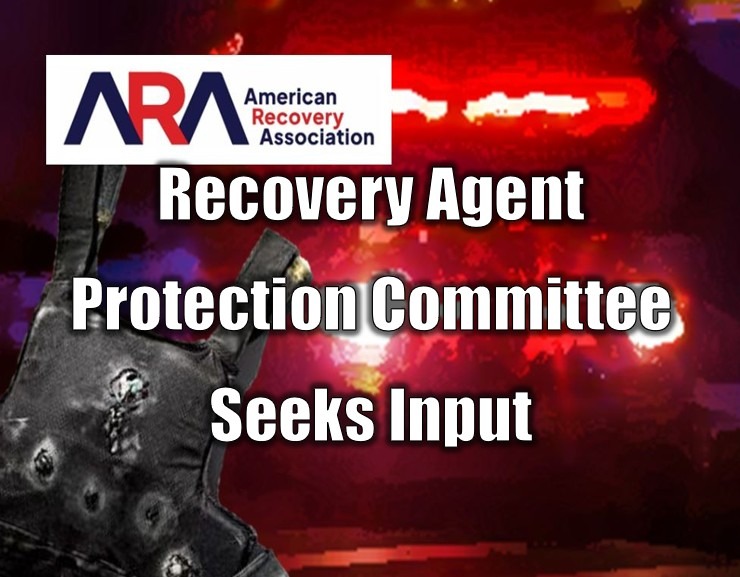
In addition, the committee is examining the legal considerations surrounding personal protective equipment, including the potential use of ballistic vests as an added layer of protection. A recent incident in Chicago, Illinois—where a recovery agent was shot in the back by unknown assailants—demonstrates that injuries may have been less severe had the agent been wearing ballistic protection.
It is recognized that some states restrict private citizens from wearing bullet-resistant vests or impose limitations on who may wear ballistic protection, often with language such as “with certain exceptions.”
The Consumer Financial Protection Bureau has also expressed concerns regarding the use of ballistic vests within the recovery industry. These concerns center on the perception that such equipment could imply law enforcement authority or intimidate a debtor during a repossession, potentially creating a wrongful repossession scenario.
Additionally, some law enforcement officials have expressed concerns that recovery agents wearing ballistic vests may be perceived as armed, which could increase tension during repossession-related encounters.
The scope of this initiative is substantial and may expand in multiple directions. Numerous challenges are anticipated. For this reason, industry participants are encouraged to take an active role in supporting the committee’s mission.
Input is being sought on training topics that should be addressed, as well as any information or video documentation of attacks on recovery agents. Insight into state laws relevant to current or future challenges is also welcomed.
Finally, the Recovery Agent Protection Committee welcomes additional members who are willing to contribute their time and expertise. If interested, email: [email protected].
 About the American Recovery Association (ARA)
The American Recovery Association is the world’s largest association dedicated to the advancement and professional development of the recovery and remarketing industry. ARA provides education, compliance resources, and advocacy for hundreds of recovery professionals nationwide. It is also the host of the annual North American Repossessors Summit (NARS), the largest event in the industry.
🔗 Visit: repo.org | 📞 Call: (972) 755-4755
Recovery Agent Protection Committee Seeks Input – Recovery Agent Protection Committee Seeks Input – Recovery Agent Protection Committee Seeks Input
Recovery Agent Protection Committee Seeks Input – American Recovery Association – ARA – Repossession Violence – Repossession History – Repossession – Repossess – Repossession – Repossession Agency – Repossessor




More Stories
TAAR Announces 3rd Annual Conference in Nashville and Opens Sponsorship Opportunities
Trial Date Set for Jayson Click Repossession Murder
ARA Addresses Impact of Rising Fuel Costs Amid Ongoing Iran Conflict
State Associations to Give Annual Presentation at NARS 2026
One Industry, One Standard
LOCKEDD IN – The First Career System Built for Recovery Drivers