



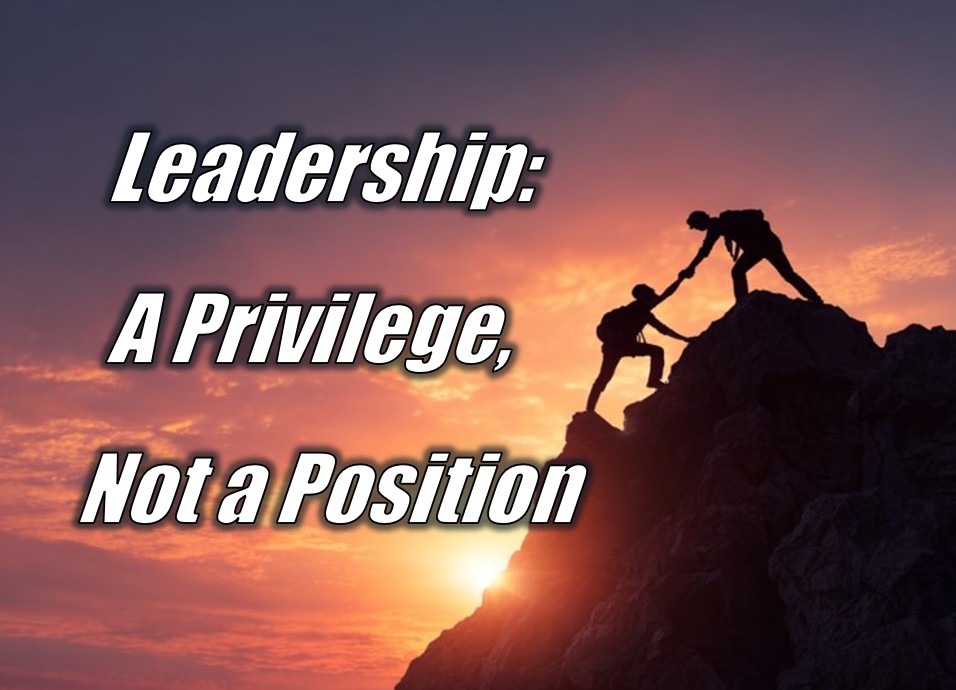
“A true leader has the confidence to stand alone, the courage to make tough decisions, and the compassion to listen to the needs of others.”
– General Douglas MacArthur
GUEST EDITORIAL
Leadership is not about title, authority, or personal ambition—it is about service. When you accept a position of leadership, you are no longer serving yourself; you are serving the people who placed their trust in you. The moment you take that role, your responsibility shifts from personal gain to collective growth. It’s no longer about what you want—it’s about what’s best for the people and the mission you represent.
The Weight of Responsibility
Leadership, whether in government, business, or a national association, carries a responsibility that extends far beyond personal opinion or preference. It requires integrity, discretion, and respect—for both the organization you serve and those who depend on it.
When internal issues, misunderstandings, or criticism spill into public channels, they do more than create noise—they erode credibility and unity. The trust and confidence of those we represent are fragile, and protecting that trust must always be a leader’s first priority.
Serving as a leader is not about position—it is about stewardship. Every action, every decision, every word carries weight. They influence not just policy or perception, but also morale, teamwork, and the long-term health of the organization.
–
Balance
True leadership demands balance—between the experienced and the emerging, between tradition and innovation, between those who built and those now building.
The wisdom of those who came before us provides grounding and structure. The energy and creativity of new leaders bring progress and innovation. Without that balance, the organization loses its sense of direction—risking the destruction of systems built with purpose and the creation of structures without understanding.

Growth is not only welcomed—it is necessary. But it must come from a place of awareness, humility, and respect for the foundation already laid.
Leaders must also understand the organizations they represent. Decisions made without comprehension of corporate structure, governance, or compliance can create risk and confusion. Awareness is not optional—it is the very essence of accountability.
Integrity
We owe it to ourselves, to one another, and to those we represent to protect the integrity of our organization. That means being intentional in our actions, measured in our words, and respectful of those who came before—even when we might have done things differently.
Public criticism of former leaders or comparison to past administrations only weakens our collective foundation. Disagreement is natural; disrespect is not. Constructive dialogue should always occur privately and professionally, rooted in a desire for understanding—not confrontation.
True leadership is not about being right—it’s about doing right. It is about humility, professionalism, and the ability to keep the mission at the center of every decision. Progress is only possible when we hold ourselves to the same standard of accountability that we expect of others.
–
Respect
Leadership within any organization especially ones we volunteer for requires not only passion but also knowledge—of corporate governance, operational structure, and procedural requirements. Informed decisions protect the integrity of both the institution and the people it serves.
We must also recognize that leadership is a continuum. The achievements of those who came before us laid the groundwork for today’s opportunities. Progress is built through respect and collaboration, not by dismissing the past.
Criticism of previous leadership or disregard for their contributions undermines the very institution we are entrusted to protect. Great leaders understand that respect is not a courtesy—it is a responsibility.
Finally, true leaders have the courage to listen. Listening does not mean agreeing; it means seeking to understand. Leadership is not measured by how loudly we speak but by how well we hear, reflect, and respond with grace and purpose.
–
In Closing
Leadership is not a privilege to be exercised—it is a duty to be honored. It requires humility over ego, service over self, and courage over comfort.
To lead is to rise above division, to act with integrity, and to serve with compassion. When we lead with these principles, we do more than guide an organization—we strengthen a community, honor those who came before, and inspire those who will follow.
 Respectfully,
Stephanie Findley
CEO,
I R Services
Leadership: A Privilege, Not a Position – Leadership: A Privilege, Not a Position – Leadership: A Privilege, Not a Position
Leadership: A Privilege, Not a Position – Repossess – Repossession – Repossession Agency – Repossessor – Repossession –






More Stories
The Broken Bond Between Lenders and Agents – Positive Resolution
The Repos That May Never Come
A Repossession Is a Repossession
When “Partner” Is Just Another Word for Vendor
Welcome to the Repossession Casino — But Who Is Really Paying the Losing Bets?
The Cost of Doing Business: Why We Cannot Afford to Work for Free